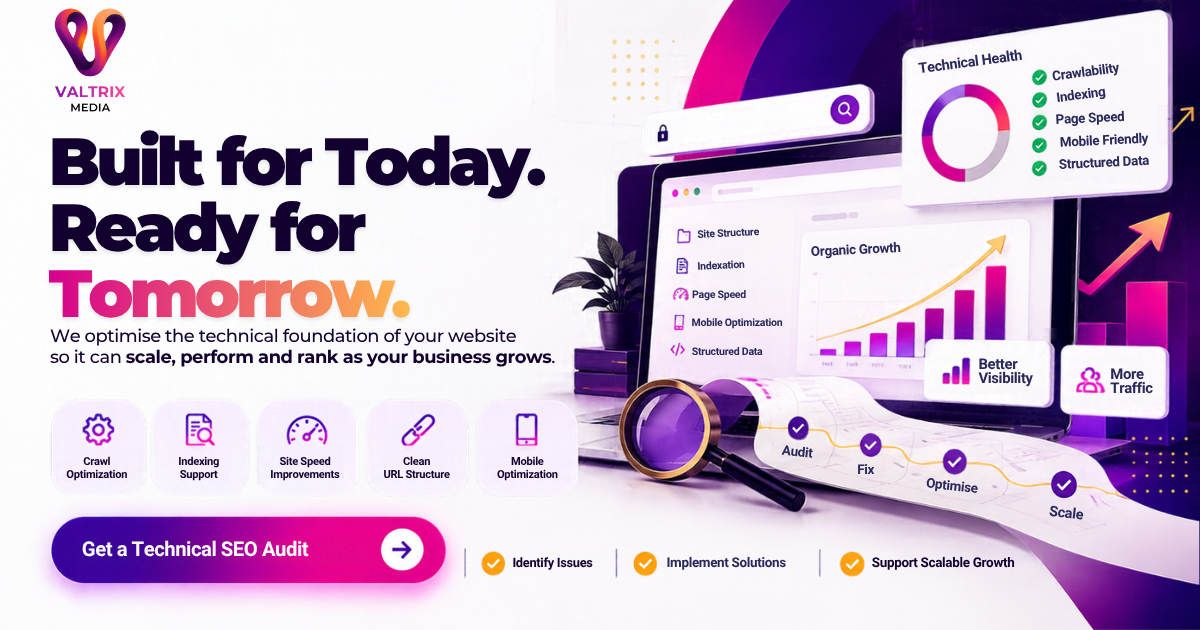
Website growth brings new opportunities, but it also introduces challenges that are easy to overlook. As your business expands, you may publish more content, introduce new services, add product categories or enter new markets. Each change increases the complexity of your website and creates new demands on its technical foundation.
Initially, everything may appear to be working well. However, broken links, indexing issues, slow loading times and confusing navigation can gradually affect how search engines access your content and how visitors interact with your website.
This is where technical SEO services become valuable. By improving your website's structure, accessibility and performance, you can build a stronger foundation for sustainable organic growth.
For Australian businesses planning to scale, technical SEO is not simply about resolving errors. It is about ensuring your website can accommodate growth without compromising usability or search visibility.
What Is Technical SEO and Why Does It Matter?
Technical SEO focuses on the elements that help search engines discover, crawl, interpret and index your website. While content optimisation improves the information available on your pages, technical optimisation addresses the underlying systems that make this content accessible.
These elements include website architecture, indexing controls, page speed, mobile usability, structured data, internal linking and redirect management.
As a website grows, maintaining these elements becomes more challenging. New pages can create unnecessary URL variations, website updates may introduce errors, and changes to navigation can make important content harder to find.
A well-maintained technical foundation helps search engines understand your website while providing visitors with a smoother experience. It also allows your business to expand its digital presence without allowing preventable technical issues to accumulate.
5 Reasons Technical SEO Becomes Critical as Your Website Scales
1. A Larger Website Requires Better Crawl Management
Search engines discover content by following links and processing URLs. When a website contains hundreds or thousands of pages, inefficient navigation, duplicate URLs and unnecessary parameters can make crawling less effective.
For example, an ecommerce website with multiple product filters may generate numerous URL variations that offer little additional value. If these variations are not managed properly, search engines may spend resources crawling pages that are not important to the business.
A technical SEO audit helps identify inefficient crawl paths, orphaned pages, broken internal links and unnecessary URL variations. Improvements to site architecture, internal linking and XML sitemaps can make important content easier to discover.
The goal is not to force search engines to crawl every page. It is to help them access the pages that matter most.
2. Indexing Problems Can Limit Your Visibility
Publishing a new page does not automatically mean it will appear in Google search results. Search engines must discover and process the page, and they may choose not to index it.
Common issues include incorrect noindex directives, blocked resources, inconsistent canonical tags, poor internal linking and duplicate content.
These problems can become more difficult to identify when a website has multiple sections or frequent content updates.
A structured audit examines indexing reports, important URLs and technical directives to identify potential barriers. Correcting these issues helps search engines process the intended versions of your pages more effectively.
Regular monitoring through Google Search Console can also reveal unexpected changes before they affect a significant portion of your website.
3. Slow Loading Times Can Disrupt the Customer Journey
Website performance becomes increasingly important as businesses attract more visitors and introduce more complex functionality.
Large images, unnecessary scripts, inefficient code and slow server responses can contribute to poor loading experiences. Visitors may struggle to browse products, compare services or complete enquiries when pages respond slowly.
Core Web Vitals help assess important aspects of user experience, including loading performance, responsiveness and visual stability.
Optimisation may involve compressing images, reducing unnecessary JavaScript, improving caching, reviewing third-party scripts and addressing layout shifts.
These improvements can make your website more comfortable to use and support better engagement. While faster loading does not guarantee higher rankings, performance remains an important part of a well-rounded SEO strategy.
4. Website Changes Can Introduce Technical Errors
Growth often involves redesigns, new integrations, platform changes and website migrations. Although these updates can improve functionality, they can also introduce unexpected problems.
For instance, changing URL structures without implementing appropriate redirects may cause existing links to lead to missing pages. Removing internal links can make important content harder to discover, while incorrect canonical tags may signal the wrong preferred URL.
Before launching significant changes, businesses should review existing URLs, redirect requirements, indexation settings and internal linking structures.
After implementation, monitoring crawl reports, status codes and organic performance helps identify issues that require attention.
Planning for technical SEO during development is generally more effective than trying to recover from avoidable problems after a website goes live.
5. Complex Site Structures Can Weaken Navigation
A website should help visitors reach relevant information without unnecessary effort. However, as new services, categories and resources are introduced, navigation can become complicated.
Important pages may end up several clicks away from the homepage, while inconsistent categories can make relationships between topics less obvious.
A logical hierarchy helps users understand where they are and where they can go next. It also supports search engine discovery through meaningful internal links.
Reviewing navigation, URL structures, breadcrumbs and contextual links can improve the overall organisation of a growing website.
For businesses expanding into new markets or service categories, this becomes particularly important because the website must accommodate additional content without becoming difficult to navigate.
What Should a Technical SEO Audit Cover?
A technical SEO audit provides a structured view of your website's current condition and identifies areas that may be restricting performance.
A thorough assessment should consider the following elements:
Crawlability and indexation: Identify inaccessible pages, incorrect directives, crawl errors and indexing inconsistencies.
Site architecture and internal linking: Review navigation, page hierarchy, orphaned URLs and links between related content.
Page performance: Assess Core Web Vitals, mobile usability, image optimisation, script loading and server response times.
Canonical tags and redirects: Check preferred URL signals, redirect chains, broken destinations and duplicate page variations.
XML sitemaps and robots.txt: Ensure sitemaps contain appropriate URLs and crawling rules do not unintentionally restrict essential content.
Structured data: Check relevant schema markup for accuracy, technical validity and compliance with search engine guidelines.
Reporting and monitoring: Establish a baseline for website health and track changes following implementation.
Not every finding needs immediate attention. Issues should be prioritised according to their severity, the pages affected and their likely impact on business objectives.
Technical SEO for Ecommerce, SaaS and Growing Businesses
Different website types face different technical challenges. The most effective strategy reflects the way a business operates rather than applying the same checklist to every website.
Ecommerce Websites
Online stores frequently deal with product variations, category filters, changing stock levels and large inventories. These features can create duplicate URLs or make important product pages difficult to discover.
Effective optimisation focuses on crawl management, canonicalisation, product structured data, internal linking and page performance. This helps maintain a clear structure as the catalogue expands.
SaaS Businesses
Software companies often publish product pages, feature descriptions, integration pages, documentation and educational resources.
Their technical priorities may include JavaScript rendering, indexation management, site architecture and performance across complex page templates. Ensuring that valuable pages are accessible helps support organic discovery throughout the customer research journey.
Service Based and Multi Location Businesses
Businesses offering several services or operating across multiple locations need a structure that helps visitors find relevant information quickly.
Clear service hierarchies, useful location pages, consistent internal linking and mobile-friendly layouts help maintain usability as the business expands.
Each location page should provide genuine local value rather than repeating the same content with only the place name changed.
How to Choose the Right Technical SEO Partner
Technical recommendations are only valuable when they address genuine problems and can be implemented effectively.
When evaluating an agency or consultant, consider whether they understand your website platform, business objectives and existing search performance. They should be able to explain technical issues in straightforward language, distinguish urgent problems from minor improvements and provide a prioritised action plan.
It is also important to clarify how implementation will work. Some changes can be completed through a content management system, while others may require development support.
Look for a partner that combines technical analysis with ongoing monitoring instead of relying solely on automated audit scores. Clear reporting should show what has changed, which issues remain and how the work supports your wider objectives.
At Valtrix Media, our approach combines technical analysis, practical implementation and continuous optimisation. We focus on building a website foundation that supports organic visibility while working alongside content marketing, website development and other digital activities.
You can explore our wider digital marketing services to see how these capabilities can work together.
How Valtrix Media Supports Sustainable Website Growth
At Valtrix Media, we tailor our technical SEO approach to your website's structure, current performance and future plans.
We begin by examining crawlability, indexing, site architecture, page speed and other relevant technical factors. The findings are then prioritised according to their potential impact, allowing attention to be directed towards the most important improvements first.
Depending on your website's needs, implementation may involve refining XML sitemaps, reviewing robots.txt rules, correcting canonical tags, improving internal links, resolving redirect issues and addressing performance bottlenecks.
We also monitor website health and organic performance to identify new issues as your website evolves.
This ongoing process helps businesses manage technical changes more confidently, maintain a consistent user experience and create a stronger foundation for future expansion.
Technical SEO is most effective when it supports a broader strategy. Useful content, intuitive website design and relevant marketing campaigns all contribute to helping visitors find your business and take meaningful action.
Build a Website That Is Ready to Grow
Website expansion should create opportunities rather than introduce preventable obstacles. However, increasing the number of pages without maintaining the underlying structure can make crawling, indexing, navigation and performance more difficult to manage.
A considered technical SEO strategy helps address these challenges through regular audits, targeted implementation and ongoing monitoring.
Whether you are expanding an ecommerce catalogue, adding new service pages or preparing for a website migration, maintaining technical health can help protect your existing visibility while supporting future growth.
Ready to strengthen your website's technical foundation?
Explore Valtrix Media's technical SEO services to discover how a tailored approach can help improve your website's accessibility, performance and readiness to scale.
Frequently Asked Questions
What are technical SEO services?
They focus on improving the technical elements of a website, including crawling, indexing, site architecture, page speed, mobile usability and structured data, to help search engines process content effectively.
How often should I conduct a technical SEO audit?
The frequency depends on your website's size and complexity. Regular monitoring is useful for all growing websites, while comprehensive audits are particularly valuable after migrations, redesigns or major development changes.
Can technical SEO improve organic rankings?
Technical improvements can remove barriers that prevent search engines from accessing or understanding important pages. However, rankings also depend on content relevance, competition, authority and other factors. No agency can guarantee a specific ranking position.
Do small businesses need technical SEO?
Yes. Small businesses can experience broken links, indexing issues, slow pages and incorrect technical settings just like larger organisations. Addressing these issues early can help establish a stronger foundation for future growth.
How long does technical SEO take to show results?
Timelines vary depending on the issues identified, the speed of implementation and how quickly search engines process the changes. Some improvements may be recognised relatively quickly, while broader organic performance gains can take several weeks or months.